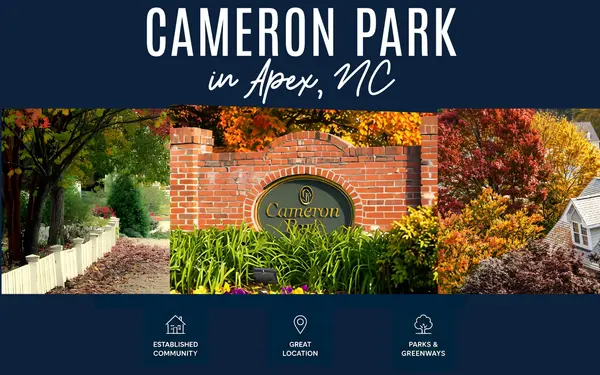
Living in Apex, NC: A Local Guide to Homes, Neighborhoods & Everyday Life
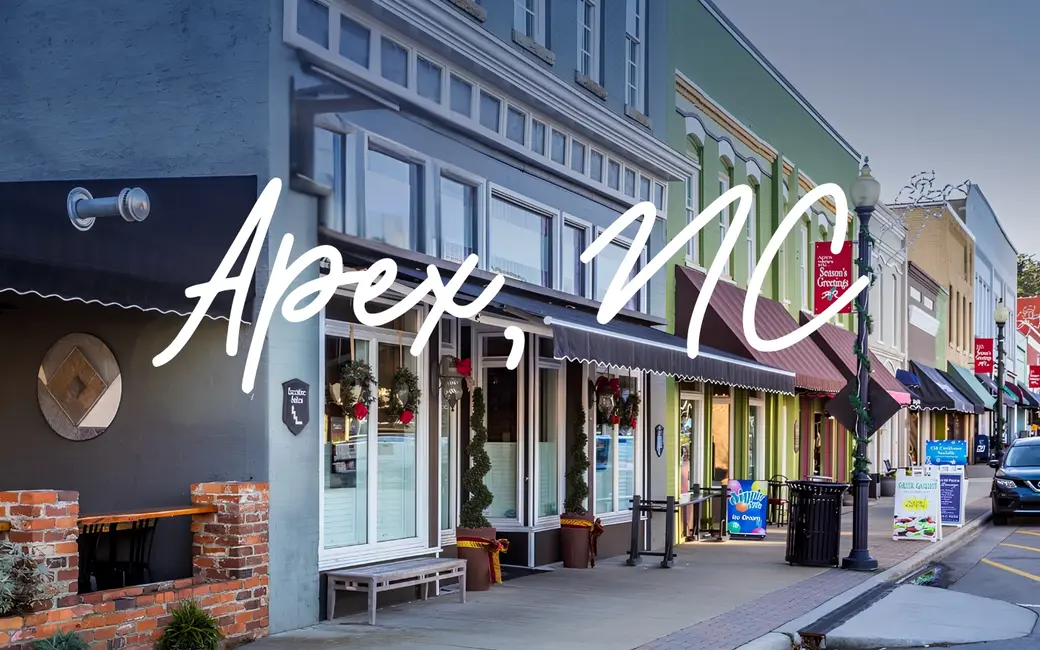
If you're considering a move to Apex, North Carolina, you'll find a community that blends an established small-town center with a wide range of neighborhoods, parks, greenways, shopping, and access to the greater Triangle.
Apex sits in southwestern Wake County and attracts people looking for convenient access to Cary, Raleigh, Research Triangle Park, and Raleigh-Durham International Airport while still enjoying a community with its own identity.
Whether you're relocating to the Triangle, moving within Wake County, or simply comparing nearby communities, here's a closer look at what living in Apex can offer.
Downtown Apex and Local Character
Historic Downtown Apex centers around Salem Street, where locally owned shops, restaurants, businesses, and community gathering spaces help give the town a distinct sense of place.
The downtown area continues to evolve while maintaining the character that makes it recognizable. Community events and cultural programming also bring residents into the center of town throughout the year.
For buyers, proximity to downtown can be an important consideration. Some neighborhoods provide convenient access to Salem Street and established parts of Apex, while others offer newer homes and communities farther from the town center.
Homes and Neighborhoods in Apex
One of the advantages of searching for a home in Apex is the variety of housing options.
Depending on location and price range, buyers may find:
-
Established neighborhoods with mature landscaping
-
Traditional single-family homes
-
Townhomes and lower-maintenance options
-
Larger homes in planned communities
-
Newer construction and recently developed neighborhoods
-
Communities with pools, trails, playgrounds, or other shared amenities
The right neighborhood often comes down to more than the house itself. Commute patterns, lot size, HOA amenities, proximity to parks, access to shopping, and the overall feel of the community can all make a meaningful difference.
That's why I recommend comparing Apex neighborhoods individually rather than treating the town as one uniform housing market.
Parks, Trails and Outdoor Recreation
Apex has an extensive parks and greenway system. The Town currently maintains more than 22 miles of public greenway, with additional connections planned as the community grows.
Apex Community Park is one of the larger recreational areas, with 160 acres that include athletic facilities, playgrounds, trails, picnic areas, and a lake. Apex Nature Park, Pleasant Park, Kelly Road Park, and other facilities provide additional options for recreation throughout town.
The greenway network also connects into trails and destinations beyond Apex. The American Tobacco Trail, for example, extends more than 22 miles between the Apex area and Durham.
For buyers who value walking, running, cycling, playgrounds, or easy access to outdoor recreation, the location of a neighborhood relative to parks and greenways can be worth considering alongside square footage and price.
Getting Around the Triangle
Apex's location is one of its major advantages.
From different parts of town, residents can access major employment and activity centers throughout the Triangle, including Cary, Raleigh, Research Triangle Park, and RDU International Airport.
NC 540 has expanded regional connectivity, while US 1 and other major roads provide additional routes through Wake County.
Actual commute times can vary significantly depending on the neighborhood, destination, and time of day, so I recommend evaluating the specific route from any home you're considering rather than relying on a general "Apex commute" estimate.
For professionals relocating to the area, this can be especially important when comparing Apex with Cary, Holly Springs, or other nearby communities.
Shopping, Dining and Everyday Convenience
Apex offers a mix of locally owned businesses and larger retail areas.
Downtown provides a more traditional small-town setting for dining and shopping, while commercial areas around major roads offer grocery stores, restaurants, services, and everyday conveniences.
Residents can also easily reach the broader shopping, dining, entertainment, and employment options throughout Cary, Raleigh, and the rest of the Triangle.
Established Neighborhood or New Construction?
Apex offers both, and the experience can be quite different.
Established neighborhoods may offer mature trees, larger vegetation, developed streetscapes, and locations closer to older parts of town.
Newer communities may appeal to buyers looking for current floor plans, energy-efficient features, newer systems, community amenities, and less immediate maintenance.
Neither is automatically the better choice. The important question is how the home's age, location, lot, community features, and price fit your priorities.
What Should Buyers Compare Before Choosing an Apex Neighborhood?
When comparing homes in Apex, I suggest looking beyond the listing photos and considering:
-
Distance to your regular commute
-
Access to major roads
-
Neighborhood amenities and HOA costs
-
Lot size and privacy
-
Home age and expected maintenance
-
Parks and greenway access
-
Shopping and everyday conveniences
-
New construction versus resale
-
Current neighborhood inventory
-
Recent comparable sales
Two homes with similar prices and square footage can offer very different lifestyles depending on where they're located.
Exploring Apex Neighborhoods
I'll be adding individual neighborhood guides for communities throughout Apex so buyers and homeowners can compare them in more detail.
Upcoming guides include communities such as Scotts Mill, Cameron Park, Dogwood Ridge, Abbington, Haddon Hall, The Preserve at White Oak Creek, Heritage Pointe, The Retreat at Friendship, Williams Grove, and others.
Each guide will look at the neighborhood's location, housing styles, community features, nearby conveniences, and considerations that may matter when deciding whether it's the right fit.
Thinking About Buying or Selling in Apex?
Real estate decisions are easier when you can look at the entire picture — not just a home's asking price.
For buyers, that means comparing neighborhoods, recent sales, available inventory, financing considerations, and the long-term fit of the property.
For homeowners, it means understanding how your particular home compares with current competition and recent neighborhood activity before making decisions about timing, preparation, or pricing.
I'm Candi Shinn, a Real Estate Broker with Real Broker LLC, serving Apex and surrounding Triangle communities. My goal is to provide practical local information that helps buyers and homeowners make well-informed decisions.
Explore current Apex homes, review local market activity, or continue through the neighborhood guides as they're added to the site.
Recent Posts